Sunday, 3 March 2024

 21st March 2024

'My felted journey with botanical colours'  was unfortunately cancelled as Helen (our speaker) was ill.

'The unstitched coif' a presentation of work which was created to contribute to a PhD research project by Toni Buckby was delivered by Sue Jones one of the core group members.


In 2023 information went out to find 40 stitchers to stitch a piece of 'Blackwork' based on an archive from the V & A.

400 people from all over the world applied, there was funding for a core group of 40 although any of the others could join and stitch if they wanted too.

One workshop was held at the V&A, another at Sheffield Hallam as the PhD was in conjunction with Hallam. At the workshop they looked at historical Blackwork, fabrics, stitches, how it could be used in modern times etc.

The project was based on a panel (15" x9") from the 1600's which featured a coif - an Elizabethan headdress. This panel however had had the original stitching/embroidery removed leaving just the outlines.

Each of the members (150) started with a printed panel of the coif, the fabric for the core group was Italian and 75 threads to an inch - a strain to see when stitching!

Sue wanted to use colours rather than black, her first flower took some 30 hours of work, then via the social media chat (set up for the group to exchange ideas, problems etc) Sue learned that someone had identified the flowers/plants and the flower she had completed was not in a colour which she considered suitable so she unpicked it, and restarted using appropriate colours.

At the conclusion there were 77pieces of work these were created by people from all over the world with members ranging from the youngest at 13 to the oldest at 85. Some had used traditional blackwork for all of the coif, others used a mix of stitches including backstitch and beading, some had even tried to link it up with electronics to produce,for example a flashing of an eye in animals or birds or flower centre.

Members had decided on their own threads eg pure silk for the sheen, vintage sylko etc, some used applique and machining, others just outlined the shapes of flowers, leaves, animals and birds. 


As part of the project members had to record information about the choice of stitches, techniques, colours etc so at the end for each piece of work there was a record of the person, the stitches, time taken (for Sue 250 hours!)  and the work.


 Currently the V&A are having extensions but the hope is there will eventually be an exhibition of the work, the curator had looked at all the exhibits and emailed each contributor personally.


It was most interesting to not only hear about the project but to see so many different and varied outcomes from the same starting point of the original coif  design.


Thursday, 8 February 2024

 15th February 2024

Boro, history and reinvention was an interesting and informative presentation by Angela Oswald.

The origins of Boro are in Japan where it is 'The Art of Necessity'

Boro depends on rags, scraps and tattered cloth which is unique to Japan, the aim is to repurpose old fabrics by stitching and mending. This 'new' fabric is then layered and stitched together to make garments, frayed edges are also a feature.

Initially the fabrics came from India, many were indigo dyed, and they were worked and worked being made into garments like Kimonos.


Boro dates from the 17th Century, from 1603 to 1868 trade with Japan was severley limited as the borders were closed (to prevent diseases and Christianity entering the country)by the Shoguns.


The poorest people, peasants and artisans, wore Boro the fabrics used being home spun hemp, rough cotton and cast off clothing which were re worked into cloth which was used to keep the poor warm and covered.


 Boro is the result of repetitive stitching of the fabric over and over through the generations, the fabrics are patched (to mend and strengthen)  and sashiko stitched to provide decoration.


Indigo dye was used as the plants grew readily in hot countries so everyone could grow the plants and it was cheap and popular. The Dutch East India company traded from one island in Japan, however Japan eventually started to trade more widely and this saw the decline of Boro with it being seen as shameful.


Now Boro is being used as a decorative technique with a variety of materials used for patching and running or blanket stitch being used to attach and enhance.


This is a traditional type of bag which was made to carry the rice eaten for lunch


Tuesday, 2 January 2024

 18th January 2024 

'My textile practice and love of ecoprinting' -  a presentation by Jane Hunter


Mini workshop 13.00 - 15.30  'A little tin of stitched treasures' 

NB will be part 2 in March


My textile practice and love of ecoprinting

Jane is from a family  who have always knitted and sewn which led to her following a creative career. At university she studied knitted and woven textiles including dye, stitch, weave etc, this was followed by creating her own knitwear which she sold at agricultural shows. Jane then took a teaching qualification, worked on knitting/felting and since Covid has focused on 'ecoprinting' of fabrics.

Ecoprinting incorporates her love of nature and dyeing, Jane uses all natural ingredients but as a chemical reaction is required in order to dye she uses mordants, Alum, Iron Sulphite, Copper and Aluminium Sulphite ( these help with light and colour fastness).


She uses alum and iron the most, liking the iron as it reacts with the tannins in the leaves. The different colours are all obtained from leaves which Jane picks in the summer (when they have most colour), dries them in layers of paper with card on top. Oak leaves have a good tannin content,the tops and undersides give different colours, birch leaves give green whilst onion skins are amber. Ferns, honesty, geranium, ash leaves all give good shapes.


 To create silk scarf Jane paints on the mordant, layers the leaves on top,rolls them round a bar/pole and wraps with string, puts into bag and steams in a pan  or folds and presses between blocks,clamps them before  dyeing.


Jane uses freezer paper to separate the layers of fabric and once removed the print on the paper can be ironed onto a scarf or used to cover books or make cards.


Fabrics used are silk, cotton, wool (merino), the wool can also be felted to achieve texture. The protein fibres give the most detail whilst cotton (cellulose) needs different treatment(slaked lime/vinegar) and paper requires the leaves to be in very close contact to obtain a good print.


 7th December 2023 Christmas Celebration, lunch and surprise speaker


Members enjoyed a musical trip around the world with our guest followed by a buffet lunch.

Sunday, 12 November 2023

16th November 2023

My road to ruins and beyond - a presentation by Leah Higgins


Mini workshop 1.00 - 3.30 pm

Button cushions part 2 

Saturday, 30 September 2023

 19th October 2023

Who needs words? a presentation by Jane McKeating


Mini workshop 1.00 - 3.30 pm 

Button cushion - part 1 this will be the embroidery

part 2 in November will be completion of embroidery, putting together and making tassels

Sunday, 17 September 2023

 21st September 2023

September social, AGM, coffee and cake 

Trisha (chair) welcomed all including visitors and thanked everyone for their continued support. She reviewed the year including the variety of excellent speakers and range of different work they created, the workshops and popularity of the mini workshops following meetings, finance, publicity, stitch together, sales table and raffles.

Thanks and presentations of flowers to:

Glenys who resigned from committee, but still takes entry fee and raffle money at meetings.

Jan (who is moving from the area)  for her work organising tea/coffee rota and supplies.

Lynn has now undertaken this role.

Notices/reminders

Exhibition at Nantwich museum approaches, theme is 'Seasons' although there will be a space for 'non seasons' work. Any type of stitched work hand/machine, any size, mount onto board/ box canvases, it must have mirror plates attached to it in order to fix to the walls in the museum.

NB Please e mail Trisha the rough size of the piece(s) of work you are creatingand also the season it depicts .

 If you are producing 3 D pieces of work we need to know the size as it has to be able to fit into the display cabinets in the museum. 

October/November mini workshops - 'Button Cushions'

Stitch together 1st and 3rd Monday of each month, now at St Annes Community hub - members welcome

Residential and 1.5 day workshops - Waddow hall now closed so would need a new venue if there is sufficient support for a residential type of course. 1.5 day workshops have seen a decline in interest/ perticipation with several having to be cancelled due to lack of numbers.

Any thoughts or suggestions please e mail Trisha


Winners of the Chairs Challenge 
(vote was tied)

Lynn Simpson and Judy Fairless


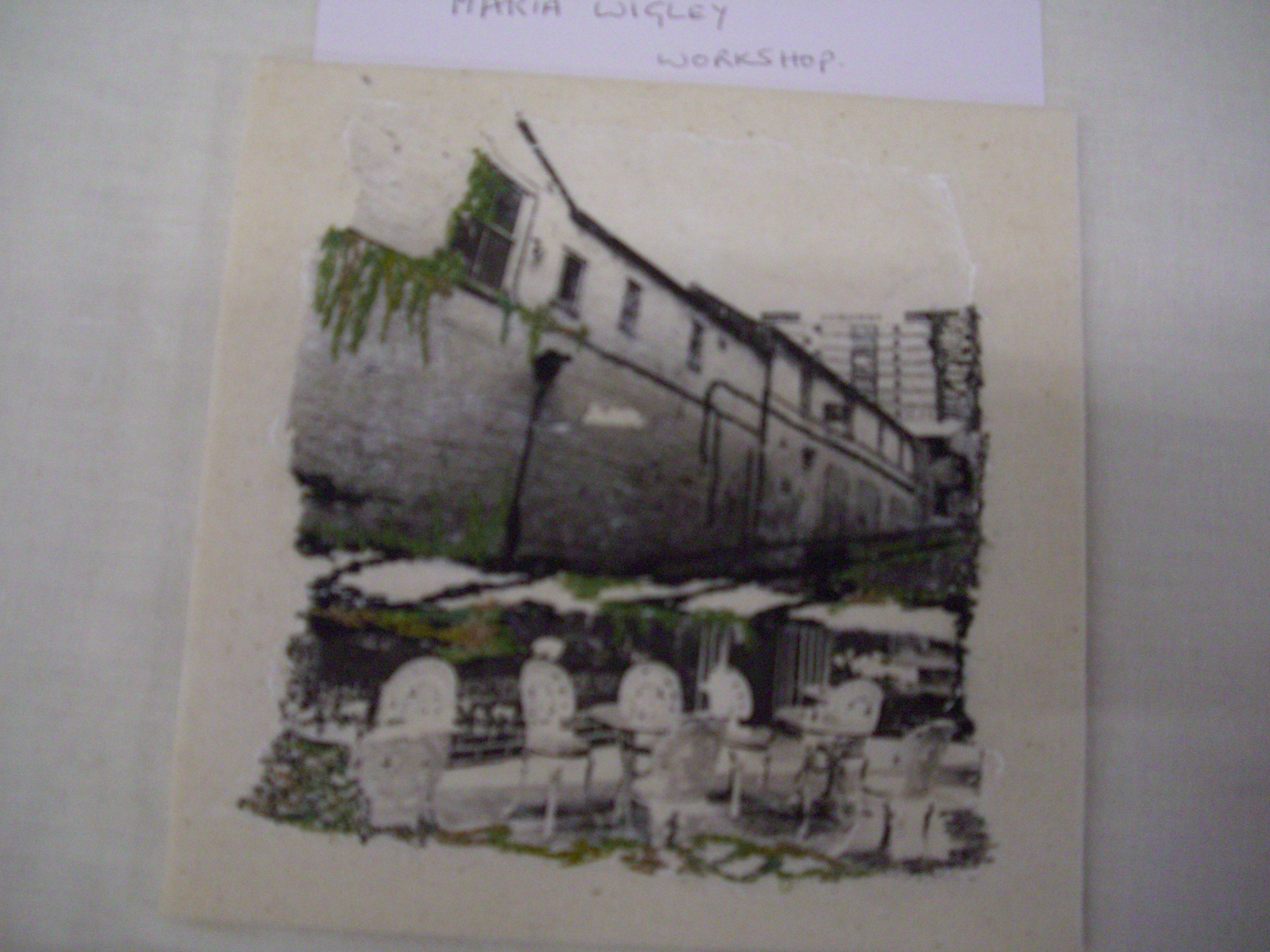
There was also a selection of work that members had produced at workshops.


Many thanks to Sue J for the wonderful selection of cakes that she made for the 'coffee and cake' social which followed the AGM.